


I want to ask you something that might make you feel uneasy. If you had to pay a hospital bill tomorrow, what would you do?
This is not the kind of bill that you can just pay with your card and forget about.
The kind of hospital bill that makes you stop and look at the amount. Think about your savings, plans, and maybe even what is important to you.
Yes, that kind of hospital bill. Okay, here is the thing.
We do not usually wake up in the morning thinking about emergencies. We think about things like rent, work deadlines, traffic, and maybe what to eat for dinner.
Our health feels like it is always okay. It feels like something we can always count on.
Until it is not okay. That is exactly why people start looking into the best health insurance plans. They do this not because they’re excited but because they know that life can change at any moment.
Not every time in a way, but enough to make things interesting, such as unexpected medical emergencies or changes in financial protection that can really impact our lives. It is funny how we spend so much time comparing things like phones, flights, and even coffee, but when it comes to protecting our health and money, we wait.
We put it off. Say to ourselves, “I will look into it later.” Later always seems to come at the worst time.
Health insurance and money. An unexpected link
Hold on, I need to think about health insurance for a moment. We often think of health and money as two things.
Like two parts of life. One is about our bodies and the other is about our money and health insurance.
But they are very close. More than we thought.
Because money usually follows when health goes down.
It all adds up: hospital bills, tests, medicines, and follow-ups. Quick. And not in a calm, predictable way. It’s sudden. Very heavy.
And this moment is where things get hard. When you have to pay a big medical bill, even a good amount of savings can go away quickly. Years of careful planning, gone in a matter of weeks.
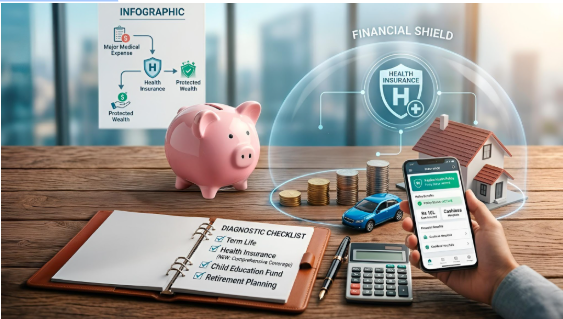
That’s not scary for people. That’s how it is. That’s why the idea of “best health insurance” isn’t about getting the “best deal”. It’s about making a shield that will protect you from financial disasters when things go wrong.
Many people hold the false belief that “I’m healthy, so I’ll be fine.” This one happens a lot. “I’m young.”
“I don’t get sick very often.” “I’ll think about it later.”
And to be honest, it makes sense. Planning for emergencies seems pointless when everything is going well. Almost hopeless. But health isn’t always simple to predict. A crash. An illness that comes quickly. Something that wasn’t planned.
It doesn’t look at how old you are. It doesn’t wait for the “right time.” When it happens, it’s not just about getting better; it’s also about how you pay for that recovery.
If you don’t have insurance, you’re on your own when it comes to money. You have help with insurance. That’s the difference.
What medical care really costs
Let’s talk about numbers for a minute, but not in a boring way. Today, getting medical care isn’t cheap. Not even close.
A single stay in the hospital can cost thousands, even lakhs. What if it means surgery or long-term care? The numbers go up quickly.
Please consider covering those costs yourself. Savings go down. You might need to pull out your investments. Plans are put off.
In certain situations, some individuals even resort to borrowing money. This is all due to their belief that they would not require medical care.
It’s not just the cost. It’s about how that cost will affect other things, such as the ability to afford necessary treatments or manage unexpected health issues.
Peace of mind (not enough people value it)
Having health insurance gives you a sense of security that is both subtle and strong.
You don’t think about it every day. But it stays in the background, like a safety net. And that makes you feel different.
Don’t worry as much. You don’t stress as much. You are a little sure of your choices. You understand that you’re not beginning anew if something occurs. And to be honest, is that mental comfort? It’s hard to say how much it costs.
It’s not just about big problems.
This type of coverage is a small diversion. We often think that insurance is only for big, dangerous situations. But it also helps with smaller, more common costs.
Going to the doctor. Tests. Small tasks. These might not seem like a big deal on their own. But they add up over time. Having insurance for these things can help ease the burden.
It’s like having a safety net for both emergencies and everyday health needs.
You might not think the timing is important.
Now, here’s something that not everyone knows. Before you need it is the best time to get health insurance. Doesn’t that make sense?
But many people wait until they have a health problem. By that time, obtaining coverage becomes more difficult.
Premiums can be pricier. The coverage may not be excellent. Some conditions may not be covered right away.
There are benefits to starting early. Less expensive. More coverage. Fewer rules. And most importantly, peace of mind from the start.
Choosing the right plan (without thinking too much)
Okay, this part can be a lot to take in. There are so many plans. There are so many things. There are many words you’ve never heard before.
You can easily get stuck here. But you don’t have to know everything perfectly.
Begin with the basics. Amount of coverage. Network of hospitals. Process for making a claim. Make it simple. The goal isn’t to find the best plan; it’s to find one that works for you.
Consider the emotional aspects of safeguarding your finances.
Pause for a second and recall a medical emergency involving a loved one. The weight of worry is already heavy enough. Facing sudden, massive hospital bills on top of that crisis feels unbearable.
But having insurance takes away one big worry. You can concentrate on what’s important: getting better, getting care, and getting help. Not bills. And that change? It makes everything different.
A common mistake is to depend solely on employer coverage.
Many people think that the insurance their job gives them is enough. And yes, it is useful. But it might not always be enough. Coverage limits. Restrictions on policy. What will happen if you switch jobs?
These are things you should think about. Having your own insurance gives you even more peace of mind. Something that stays with you no matter what job you have.
Health insurance as a long-term plan
Health insurance isn’t a choice you make just once. It is an integral component of your overall financial protection strategy.
Just like saving money is important. Like putting money into something. It is just as important to protect your money as it is to grow your money.
Health insurance is a part of protecting your money. It keeps costs from getting in the way of your financial journey, ensuring that you can manage unforeseen medical expenses without derailing your overall financial stability.
You have to get ready all the time. There is a change in the way you think about health insurance.
You go from thinking “I will deal with it if it happens” to thinking “I will be ready if it happens” when it comes to health insurance.
This change is not obvious. It is strong. Being ready for health insurance changes how you deal with uncertainty. It puts you in charge of your health insurance. That control is important in a world that is often unpredictable.
So, what does all of this mean when it comes to health insurance?
When you break it down, health insurance is not about paying for medical care; health insurance is about protecting your money.
Health insurance is about being stable. Health insurance is about making sure that one unexpected event does not ruin years of work.
That is something to think about when it comes to health insurance. When you look at health insurance from a picture, it is clear that health insurance is not just another bill; health insurance is a safety net that keeps you from going broke when things go wrong with your health insurance.
When everything is going smoothly with your health insurance, it is easy to overlook it. The true value of health insurance becomes apparent when things do not go as planned with your health insurance.
Once you understand this, choosing health insurance is less about comparing health insurance plans and more about being responsible for your future and those who depend on you when it comes to health insurance.
And maybe that’s what we should really take away from this experience. You don’t wait for uncertainty to knock before getting ready for it. You prepare for problems before they arise. Overall, it’s not just about keeping your health costs down; it’s also about keeping your peace of mind and financial protection stability. And having the best health insurance in place makes sure that no matter what happens, you’re ready to deal with it without everything else falling apart.